Class 9 Chapter 02 - Cell: The Building Block of Life Detailed Notes by TeachCBSE.com
TeachCBSE · May 6, 2026 · 13 min read · Notes
CHAPTER 02: Cell: The Building Block of Life
Key Words & Phrases to Remember
- Cell– the basic structural and functional unit of life.
- Unicellular– made of one cell (bacteria, yeast).
- Multicellular– made of many cells (plants, animals).
- Resolution– ability to see two close objects as separate.
- Magnification– how much larger an object appears.
- Selectively permeable– allows some substances to pass but not others.
- Osmosis– movement of water through a selectively permeable membrane from dilute to concentrated solution.
- Diffusion– movement of particles from high to low concentration (without a membrane).
- Prokaryotic– cell without a well-defined nucleus (bacteria).
- Eukaryotic– cell with a true nucleus and membrane-bound organelles (plants, animals).
- Cell wall– rigid outer layer in plants, fungi, and bacteria; made of cellulose in plants.
- Cytoplasm– jelly-like substance between the cell membrane and the nucleus.
- Organelles– tiny structures inside a cell that perform specific functions.
- Nucleus– control centre containing DNA.
- Chromosomes– rod-shaped structures made of DNA and proteins; carry genes.
- Gene– functional segment of DNA that controls a trait.
- Ribosome– site of protein synthesis.
- Endoplasmic Reticulum (ER)– network for transport and synthesis; rough (with ribosomes) and smooth (without ribosomes).
- Golgi apparatus– modifies, sorts, and packages proteins and lipids.
- Lysosome– contains digestive enzymes; cleans the cell.
- Mitochondria– powerhouses; produce ATP through cellular respiration.
- Plastids– found in plant cells; chloroplasts (photosynthesis), chromoplasts (coloured), leucoplasts (storage).
- Vacuole– large central sac in plant cells for storage and turgidity; small in animal cells.
- Mitosis– cell division producing two identical daughter cells for growth and repair.
- Meiosis– cell division producing four gametes with half the chromosome number, for sexual reproduction.
- Cell theory– all living things are made of cells, the cell is the basic unit, and all cells come from pre-existing cells.
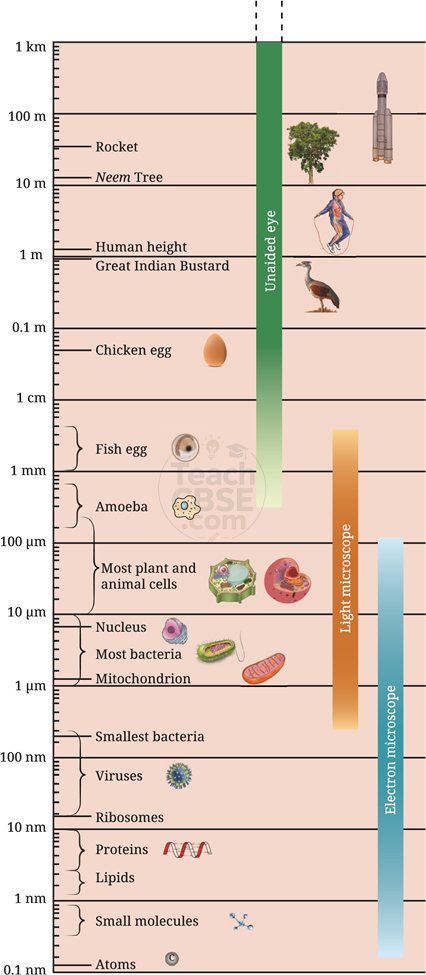 Size of the objects and its visibility through unaided to aided eye
2.1 How to Study Cells?
Why can’t we see cells with the naked eye?
- Our eyes have a limit of resolution: we can see two points as separate only if they are at least 1 mmapart (when viewed from 25 cm - the near point of human eye).
- Most cells are much smaller, so they appear as a blur or are invisible. To study cells, we need microscopes.
What do microscopes do?
A microscope has two main jobs:
- Magnification – making an object look larger.
- Resolution – showing fine details clearly (making two close points distinguishable).
 Important: The limit of resolution of a light microscope is about 0.2 μm. Objects closer than that cannot be seen as separate.
Beyond Light Microscopes
- Electron microscopes use a beam of electrons instead of light. They can magnify up to millions of times and resolve details at the nanometre scale (1 nm = 1 billionth of a metre).
- Scanning Electron Microscope (SEM) gives 3D-like images of surfaces (e.g., stomata on a leaf, Fig. 2.4).
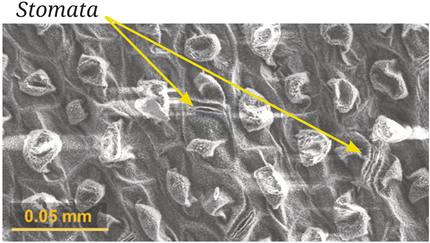 Electron micrograph of lower surface of a Colocasia leaf showing stomata
2.2 Structure of a Cell
All cells have three fundamental parts:
- Cell membrane (plasma membrane) – outer boundary.
- Cytoplasm – jelly-like substance filling the cell.
- Nucleus (in eukaryotic cells) – the control centre.
2.2.1 Cell Membrane – The Guardian of the Cell
- Thin, flexible boundary (about 7–10 nm thick).
- Selectively permeable: it lets some substances pass and blocks others (like a security guard).
- It is made of a lipid bilayer (two layers of fat molecules) with proteins embedded. This is the fluid mosaic model:
- Fluid – the lipid molecules can move sideways, making the membrane flexible.
- Mosaic – proteins are scattered like tiles in a mosaic.
Diagram: Fluid mosaic model
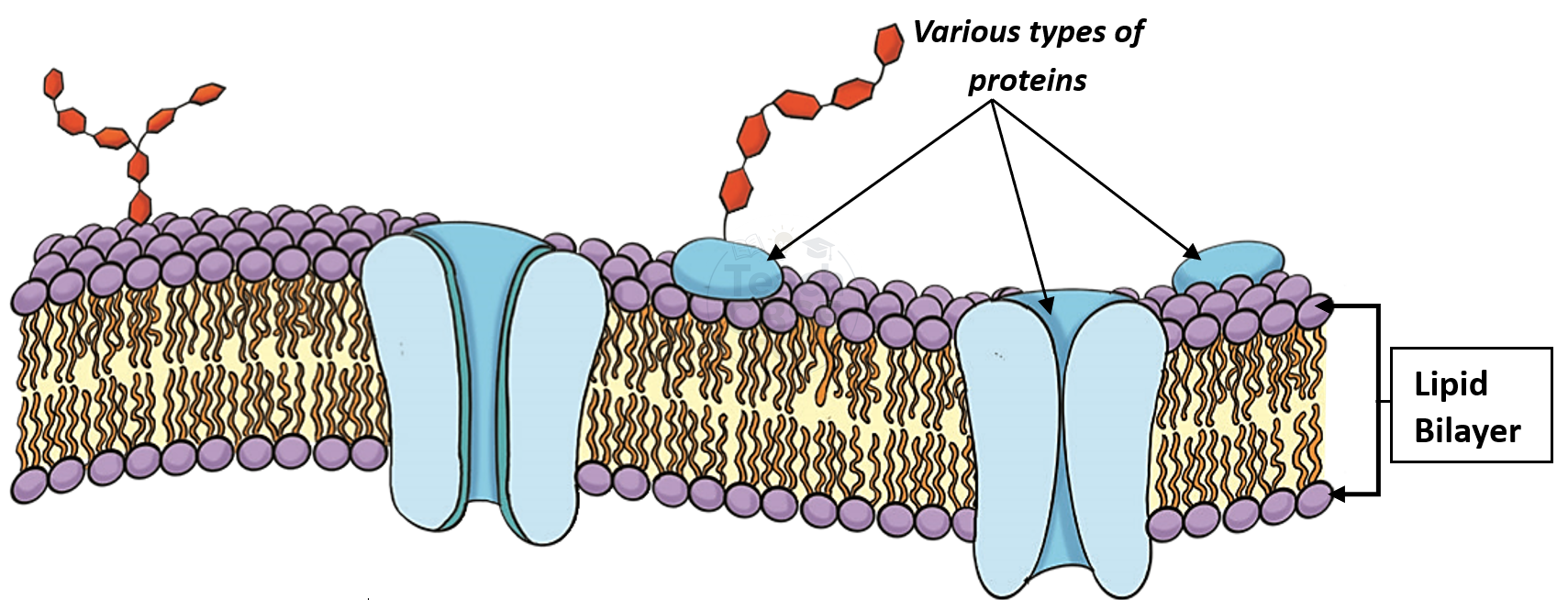
Functions of membrane proteins:
- Act as channels or carriers for specific molecules.
- Serve as receptors for signals.
- Help in cell recognition and adhesion.
Osmosis – The Special Diffusion of Water
You must understand the difference between diffusion and osmosis.
- Diffusion: movement of particles (like dye spreading in water) from a region of high concentration to low concentration, until evenly spread. No membrane needed.
- Osmosis: movement of water molecules through a selectively permeable membrane from a region with more water (dilute solution) to a region with less water (concentrated solution). This continues until the concentrations equalise.
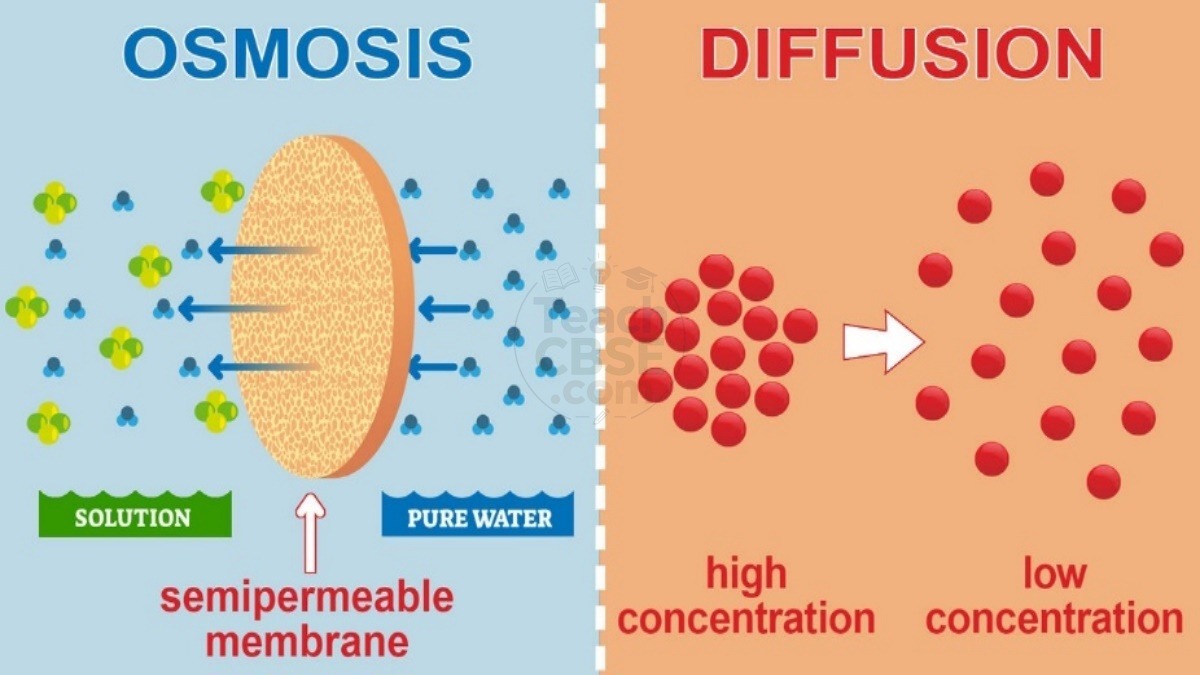
Types of solutions and cell behaviour:
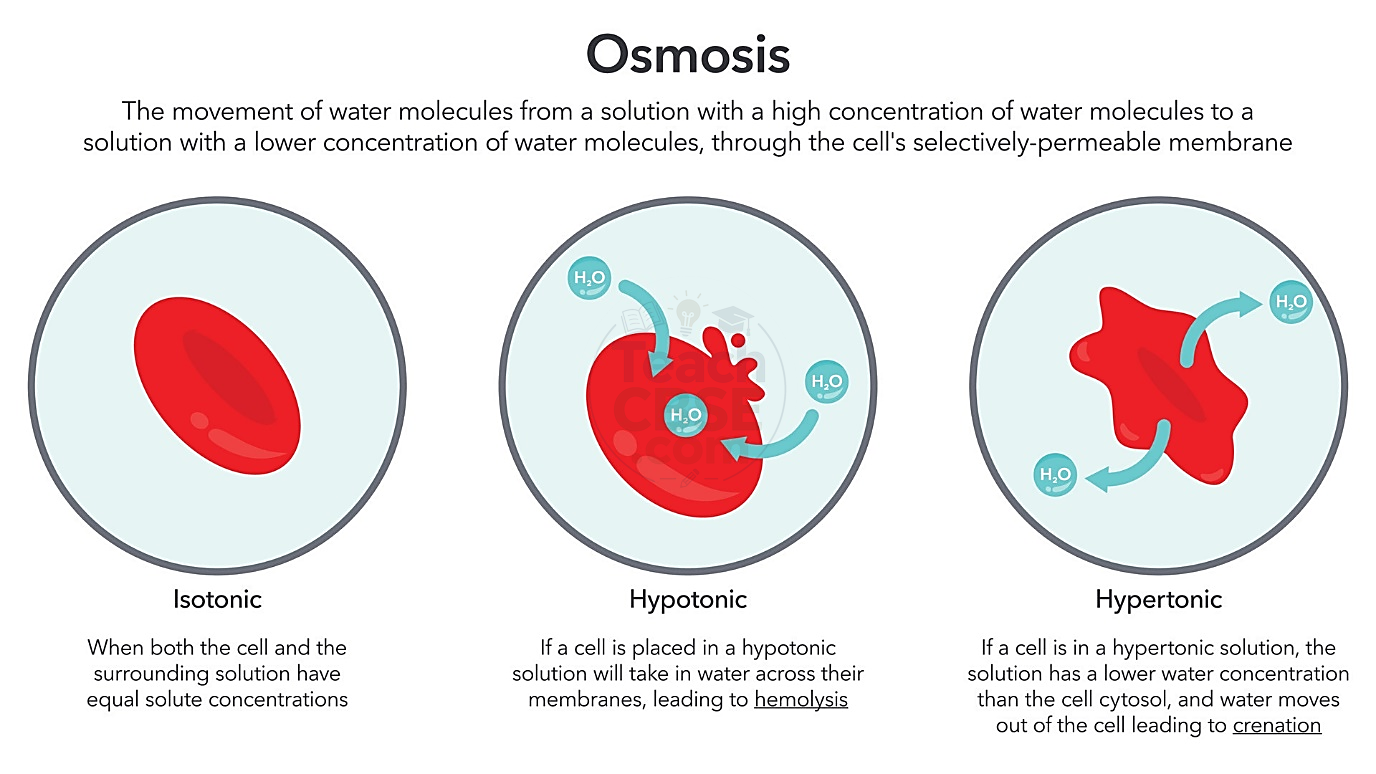
- Hypotonic solution (more water, less solute than cell): cell swells (animal cell may burst; plant cell becomes turgid thanks to cell wall).
- Hypertonic solution (less water, more solute): cell shrinks (plasmolysis in plant cells – membrane pulls away from the wall).
- Isotonic solution (same concentration): no net water movement, cell stays normal.
2.2.2 Cell Wall – The Rigid Outer Covering
- Present in plants, fungi, bacteria, absent in animal cells.
- Plant cell wall is made of cellulose (a carbohydrate). It is fully permeable – allows water and dissolved minerals to pass freely.
- Why do plants need it?
- Provides rigidity and shape.
- Helps plants stand upright against wind and rain.
- Prevents the cell from bursting when water enters (turgor pressure).
- Animal cells lack a wall, so they can change shape easily, aiding movement and flexibility.
- Onion peel / Rheeo leaf: cells are box-shaped, arranged regularly, with distinct cell walls.
- Human cheek cells: irregular shape, no cell wall, just a membrane.
When both are kept in concentrated sugar solution: - Plant cell: plasmolysis – the cell wall retains shape but cytoplasm shrinks and the membrane pulls inward.
- Animal cell: whole cell shrinks because there is no rigid wall to hold it in place.
Pause and Ponder Answers (quick check)
- Plants are fixed in one place; the cell wall gives structural support to withstand environmental stresses. Animals move, so flexible cells without walls are advantageous.
- If plant cell wall became as flexible as a membrane, the cell would burst when water enters by osmosis or would collapse, losing rigid support.
- Equal size and initial weight ensure a fair comparison; any change in weight can be attributed to the solution, not initial differences.
2.3 The Cell Interior – A Coordinated Working System
Prokaryotic vs. Eukaryotic Cells (Very Important)
|
Feature |
Prokaryotic Cell (Bacteria) |
Eukaryotic Cell (Plant/Animal) |
|
Nucleus |
No well-defined nucleus; DNA in a region called nucleoid (no nuclear membrane) |
True nucleus enclosed by a nuclear membrane |
|
Membrane-bound organelles |
Absent (no mitochondria, ER, Golgi, etc.) |
Present |
|
Size |
Small: 1–10 μm |
Larger: 10–100 μm |
|
Number of cells |
Usually unicellular |
Unicellular or multicellular |
|
Chromosome |
Single circular DNA molecule |
Multiple linear chromosomes |
|
Ribosomes |
Present (70S) |
Present (80S) |
Why do Eukaryotic Cells Need Organelles?
Just like a factory has different departments for different jobs, a cell has organelles to carry out various functions simultaneously without interference. This allows the cell to build materials, produce energy, remove waste, and divide efficiently.
Nucleus – The Control Room
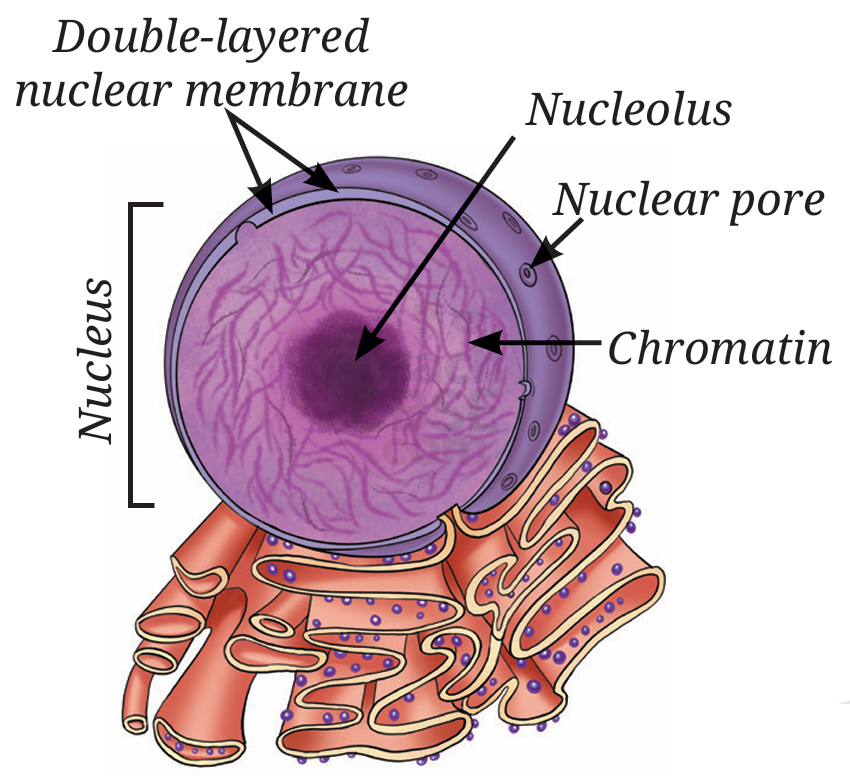
- Surrounded by a double-layered nuclear membrane with pores (allow RNA and proteins to pass).
- Contains nucleolus – site where ribosomal subunits are made.
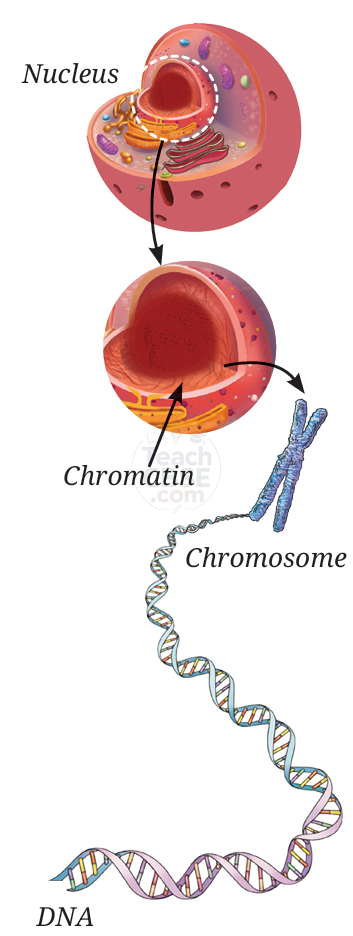
- Inside, chromatin (uncoiled DNA + proteins) is present when cell is not dividing. During cell division, chromatin condenses into chromosomes.
- Chromosomes are made of DNA. Functional segments of DNA are genes that pass traits from parents to offspring.
- Fun fact: Mature human red blood cells have no nucleus to maximise space for haemoglobin, but as a result they can’t divide and live only ~120 days.
Ribosomes – Protein Factories
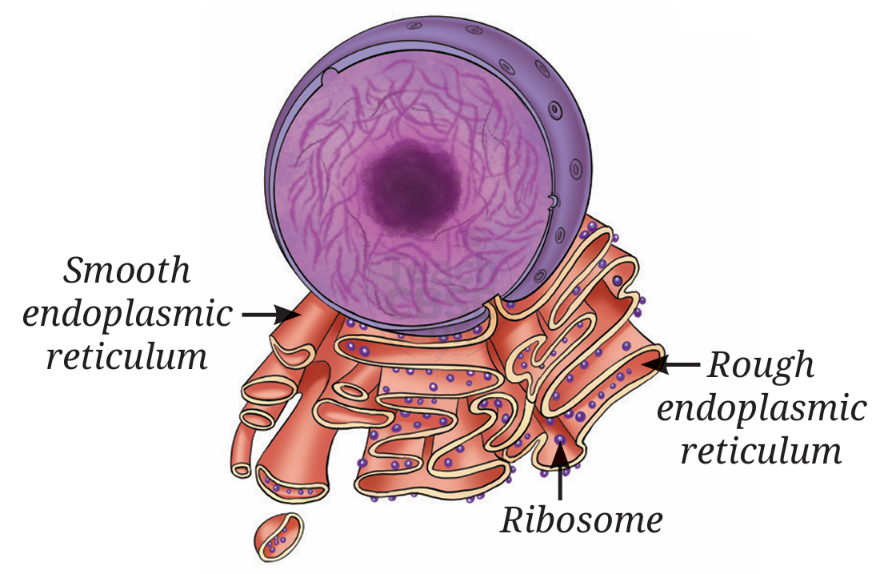
- Tiny structures made of RNA and proteins; found freely in cytoplasm or attached to ER.
- Function: read messenger RNA and link amino acids to make proteins.
Endoplasmic Reticulum (ER) – The Manufacturing and Transport Network
- A network of membrane-bound tubes and sacs spreading from the nuclear envelope.
- Rough ER (RER): has ribosomes on its surface; synthesises and transports proteins (e.g., pancreatic cells produce digestive enzymes).
- Smooth ER (SER): no ribosomes; synthesises lipids (fats) and steroid hormones; also detoxifies poisons in liver cells.
Golgi Apparatus – The Packaging and Shipping Centre
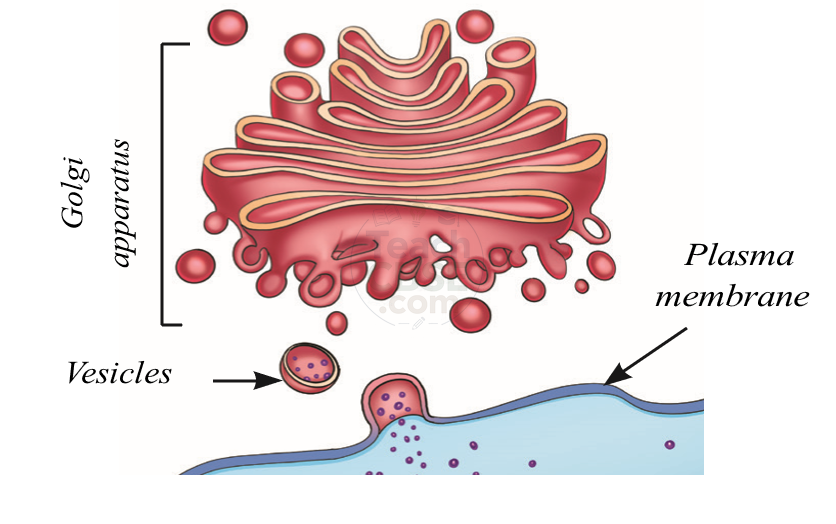
- Stacks of flattened membrane sacs.
- It receives proteins and lipids from the ER, modifies them, sorts, and packages them into vesicles (small membrane bubbles).
- Vesicles then move to the cell membrane for secretion or to other organelles.
- Analogy: It’s like a post office – sorting parcels, labelling them, and sending them to the right address.
Lysosomes – The Clean-up Crew
- Small membrane-bound sacs filled with powerful digestive enzymes.
- Break down worn-out organelles, food particles, and foreign invaders (bacteria).
- During fertilisation, sperm’s lysosomal enzymes help penetrate the egg.
- They also cause autolysis (self-digestion) of old or damaged cells – hence called “suicide bags” (but this is a controlled, useful process).
Mitochondria – The Powerhouses
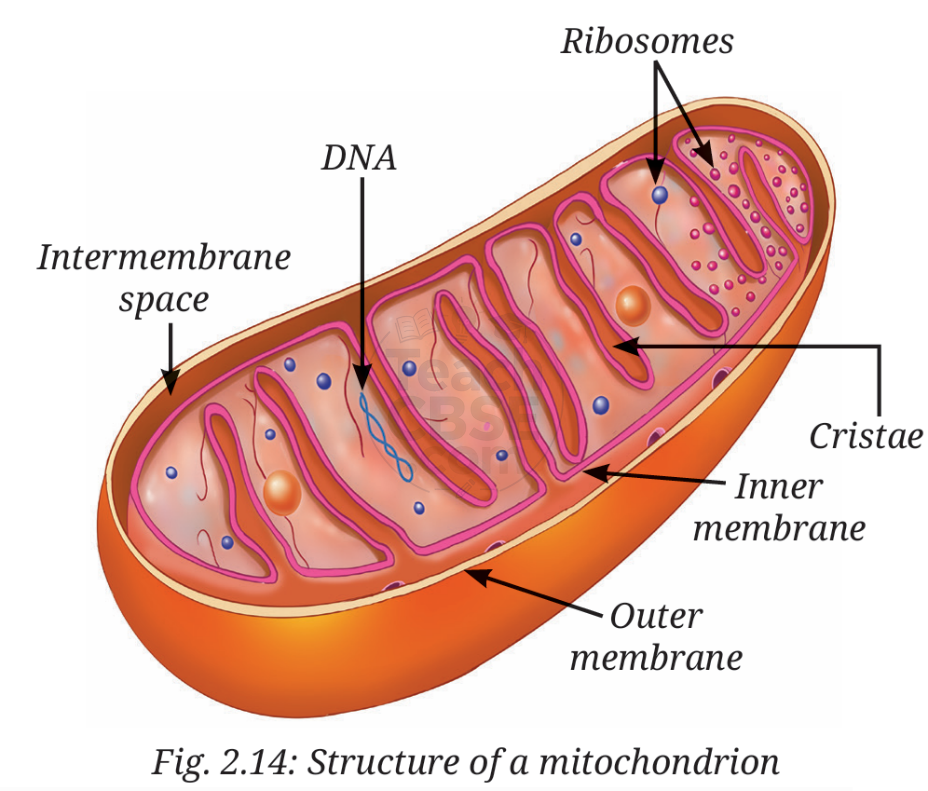
- Double-membrane organelle: smooth outer membrane, folded inner membrane (cristae) to increase surface area.
- Function: breakdown of glucose (and other fuels) in the presence of oxygen → cellular respiration → releases energy stored as ATP (adenosine triphosphate). ATP is the energy currency used for all cellular work.
- Mitochondria have their own DNA and ribosomes, so they can make some of their own proteins and divide independently – evidence of their evolutionary origin from ancient bacteria.
Plastids – The Photosynthesis and Storage Centres (Plant Cells Only)
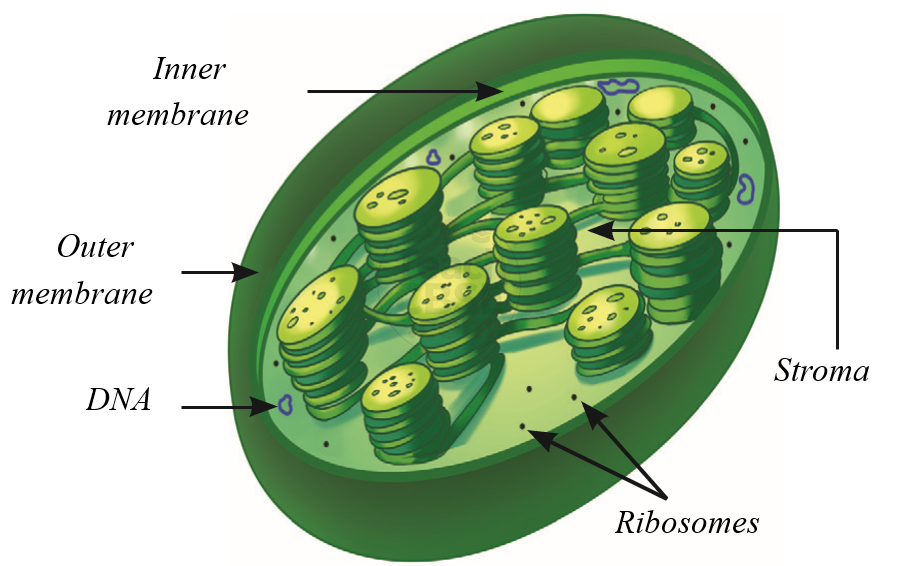
- Chloroplasts – contain the green pigment chlorophyll. They capture sunlight energy for photosynthesis:
water + carbon dioxide → glucose + oxygen (light energy). - Double membrane; inside there is a fluid stroma and stacks of disc-like structures (thylakoids) containing chlorophyll.
- Like mitochondria, they have their own DNA and ribosomes.
- Chromoplasts – contain yellow, orange, red pigments (carotenoids) giving colour to flowers and fruits, helping in pollination and seed dispersal.
- Leucoplasts – colourless, store food: amyloplasts (starch in potato), elaioplasts (oils), proteinoplasts (proteins).
Vacuoles – Storage Tanks
- In mature plant cells: a single large central vacuole filled with cell sap (water, sugars, minerals, waste). It maintains turgor pressure, keeping the plant firm. If water is scarce, the vacuole shrinks, and the plant wilts.
- In animal cells: vacuoles are small and temporary, mainly for storage or excretion.
- The vacuole membrane is called tonoplast (selectively permeable).
2.4 How do Normal Cells Grow and Divide?
Why cells divide
- Growth: an organism grows by increasing the number of cells, not just cell size.
- Repair: skin cuts, hair fall, wear and tear – new cells replace dead/damaged ones.
- Reproduction: unicellular organisms divide to reproduce. In multicellular organisms, gametes are formed.
 Two major types of cell division
- Mitosis – For Growth and Repair
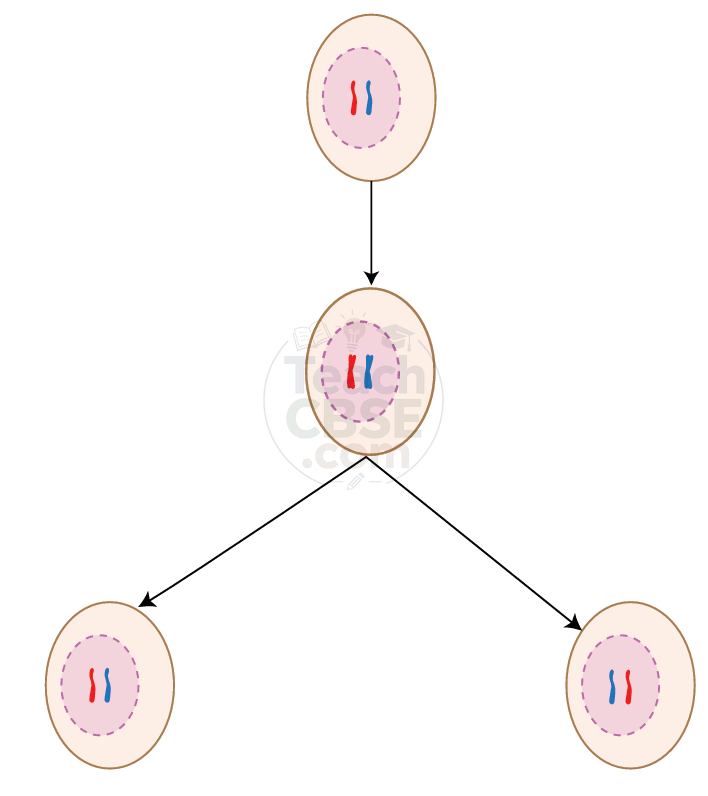
- One parent cell divides to produce two genetically identical daughter cells (same number of chromosomes).
- Takes place in body (somatic) cells.
- Steps (simple overview):
- DNA duplicates.
- Chromosomes condense and align.
- Chromosomes separate into two sets.
- Cell splits into two.
- Importance: Maintains chromosome number constant across generations of body cells, ensures genetic stability, heals wounds.
- Meiosis – For Sexual Reproduction
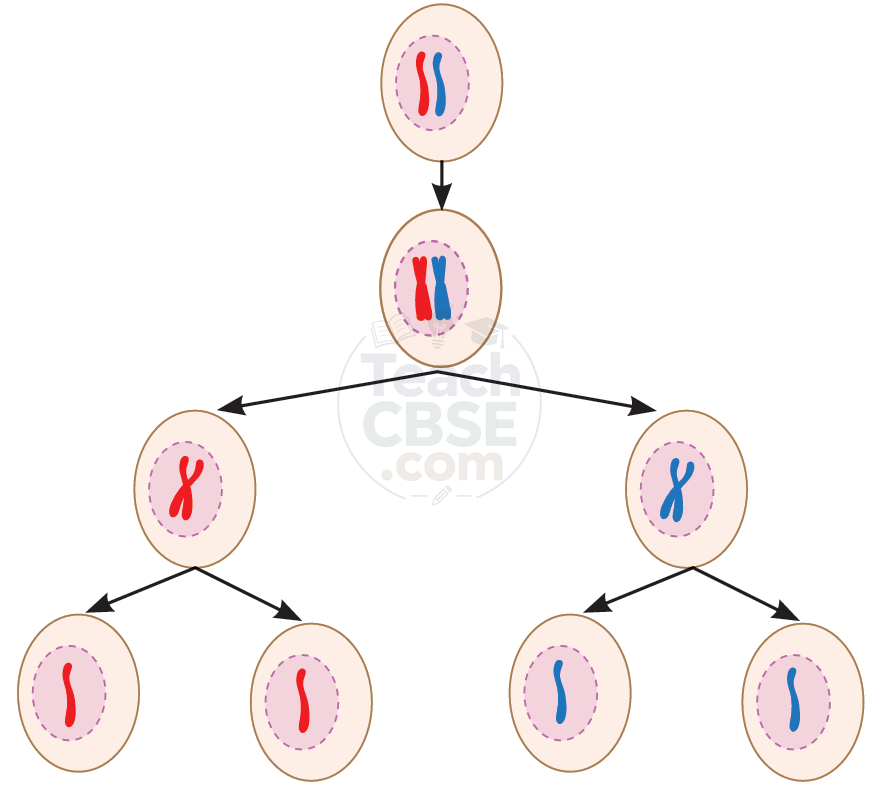
- Occurs only in reproductive organs (testes in males → sperm; ovaries in females → eggs; in plants anthers → pollen grains, ovaries → egg cells).
- Involves two successive divisions (Meiosis I and II).
- Result: four daughter cells, each with half the number of chromosomes (haploid).
- When a sperm and egg fuse during fertilisation, the chromosome number is restored to the normal (diploid) number.
- Importance: Generates genetic variation because chromosomes shuffle and recombine.
What if mitosis or meiosis goes wrong?
- Errors in mitosis → uncontrolled cell division → tumour formation (cancer). Cancer cells lose contact inhibition (normal cells stop dividing when they touch neighbours) and keep growing.
- Errors in meiosis → sperm or egg with wrong chromosome number → genetic disorders (like Down syndrome) or pregnancy loss.
Key concepts
- Contact inhibition: normal animal cells stop dividing when in contact with others. Cancer cells ignore this signal.
- Cell culture: growing cells outside the body in nutrient medium under controlled conditions – used in research, vaccine production, etc.
- Programmed Cell Death (Apoptosis): genetically directed cell death for balancing cell numbers; “webbed fingers in embryo” example – apoptosis removes cells between digits.
2.5 Cell Theory – The Unifying Principle of Biology
The classical cell theory (developed by Schleiden, Schwann, Virchow)
- All living organisms are composed of one or more cells.
- The cell is the basic structural and functional unit of life.
- All cells arise from pre-existing cells (Virchow’s addition, Omnis cellula e cellula).
Do cells live forever?
No. Every cell has a definite life span. Old, damaged cells undergo programmed cell death (apoptosis) and are replaced. Uncontrolled survival leads to cancer.
Totipotency
Gottlieb Haberlandt proposed that any living plant cell can regenerate into a whole plant if given proper nutrients and conditions. This is the basis of plant tissue culture.
Let’s Revisit the Activities – What They Teach
|
Activity |
Key Takeaway |
|
2.1: measuring cell size |
Understand microscope field of view, calculate actual cell size, appreciate magnification |
|
2.2: potato in water vs salt solution |
Osmosis – water moves from dilute to concentrated solution through a selectively permeable membrane |
|
2.3: onion peel and cheek cells |
Plant cells have a cell wall, regular shape; animal cells are irregular and shrink in hypertonic solution without wall |
|
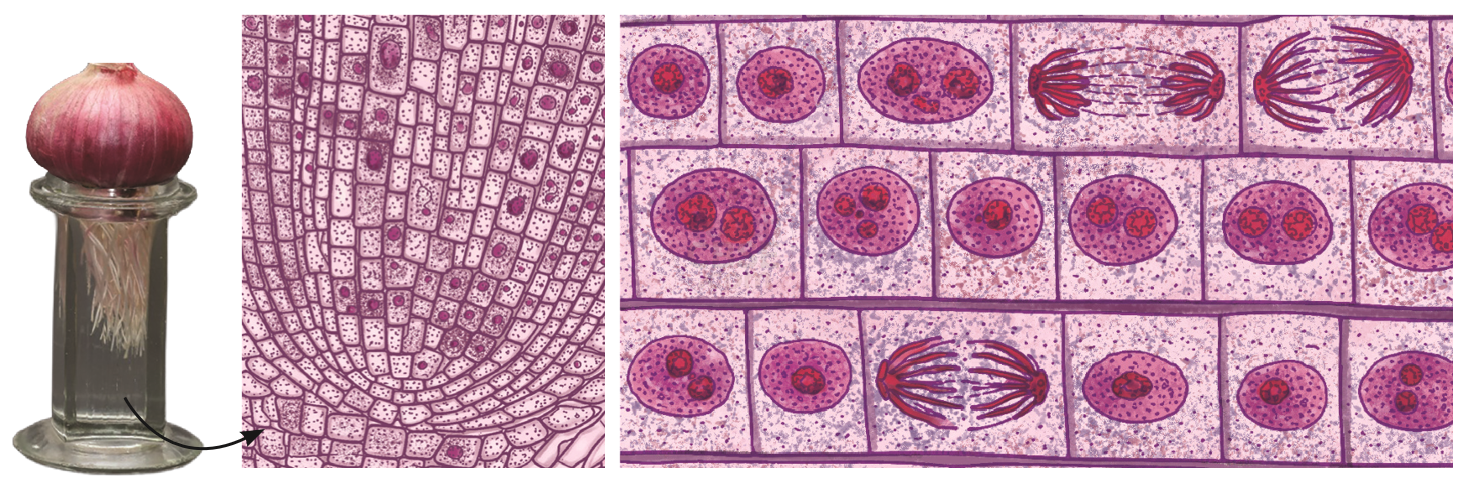
2.5: onion root tip squash |
Cells in the root tip undergo active division; visible stages of mitosis |
Quick Comparison Charts
Animal Cell vs Plant Cell
|
Part |
Animal Cell |
Plant Cell |
|
Cell wall |
Absent |
Present (cellulose) |
|
Chloroplasts |
Absent |
Present in green parts |
|
Vacuole |
Small, temporary |
Single large central vacuole |
|
Centrioles |
Present (help in cell division) |
Absent in most higher plants |
|
Shape |
Irregular |
Usually rectangular / fixed |
Organelle Functions at a Glance
|
Organelle |
Simple Job Analogy |
|
Nucleus |
CEO’s office (controls everything) |
|
Ribosomes |
Factory workers making proteins |
|
RER |
Assembly line with workers on it |
|
SER |
Finishing department for fats |
|
Golgi apparatus |
Packaging and shipping department |
|
Lysosomes |
Cleaning squad / waste disposal |
|
Mitochondria |
Power generators (ATP) |
|
Chloroplasts |
Solar panels + kitchen (photosynthesis) |
|
Vacuole |
Storage tank / water reservoir |
|
Cell membrane |
Security gate with selective entry |
Important Diagrams to Practice
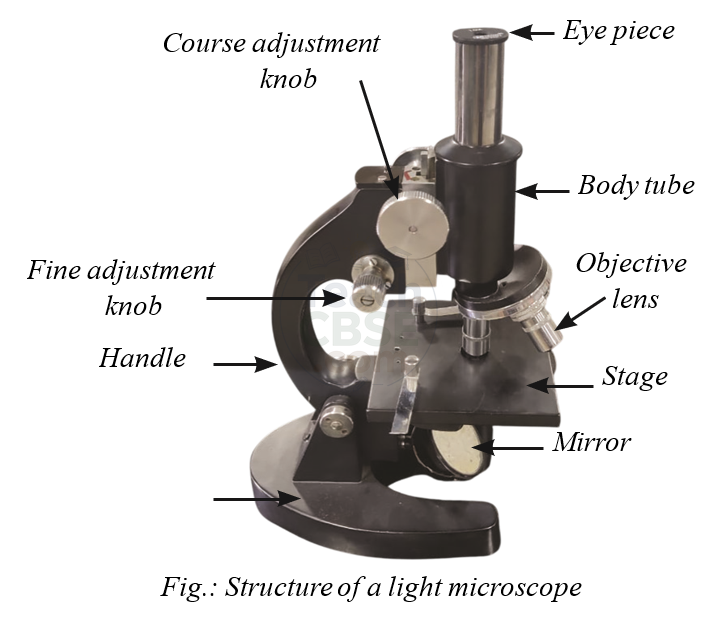
- Light microscope labelled (Fig. 2.2).
- Fluid mosaic model of cell membrane (Fig. 2.7).
- Onion peel cells and human cheek cells (Figs. 2.8a, 2.8b).
- Comparison of a cell in different solutions – plasmolysis (Fig. 2.6, 2.9).
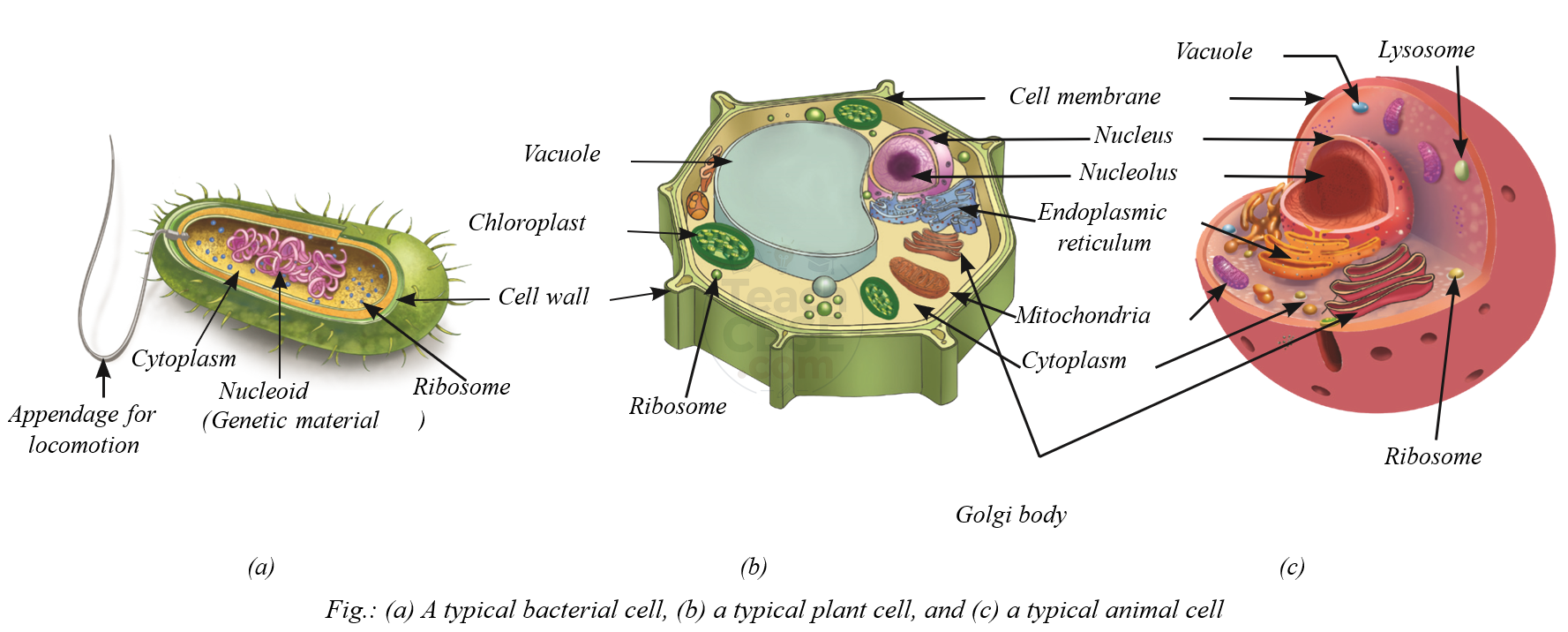
- Prokaryotic cell, plant cell, animal cell – all labelled (Fig. 2.10a, b, c).
- Nucleus with nuclear membrane, nucleolus, chromatin (Fig. 2.11).
- Endomembrane system – RER, SER, Golgi, vesicles (Fig. 2.13).
- Mitochondrion – cristae, double membrane (Fig. 2.14).
- Chloroplast – grana, stroma (Fig. 2.15).
- Stages of mitosis in onion root tip (Fig. 2.17).
Self-Assessment Questions
Try to answer these without looking at the notes first.
- Explain why a light microscope can magnify an onion cell 100X but still cannot show the details of the cell membrane. (Hint: resolution vs magnification)
- You place a Rheeo leaf peel in salt solution. Sketch what the cell looks like after 30 minutes. Label the cell wall and the shrunken cell membrane.
- Distinguish between prokaryotic and eukaryotic cells in three points.
- What would happen to a plant cell placed in distilled water? Why doesn’t it burst?
- Name the organelle that:
- Packages secretory proteins (Golgi)
- Destroyed worn-out cell parts (Lysosome)
- Is called the powerhouse (Mitochondria)
- Contains chlorophyll (Chloroplast)
- A student says lysosomes are “suicide bags”. Is this a correct description? Explain briefly.
- Why is meiosis important for sexual reproduction? What would happen if gametes were formed by mitosis? (Answer: chromosome number would double each generation)
- Where in a plant would you find cells undergoing meiosis? (Anthers and ovaries)
Final Summary for Quick Revision
- The cell is the smallest unit of life. Some organisms are unicellular, others multicellular.
- We use microscopes to study cells. Resolution and magnification are key features.
- The cell membrane is a fluid, selectively permeable barrier; it operates by diffusion, osmosis, and active transport.
- Osmosis is water movement across a membrane toward the higher solute concentration side.
- Plant cells have a rigid cell wall of cellulose that prevents bursting and maintains shape.
- Eukaryotic cells have a true nucleus and membrane-bound organelles; prokaryotic cells (bacteria) do not.
- Nucleus houses DNA in the form of chromosomes. Genes are segments of DNA.
- Ribosomes make proteins; ER assists in synthesis and transport; Golgi apparatus packages and ships materials.
- Lysosomes digest waste; mitochondria produce ATP through respiration; chloroplasts conduct photosynthesis.
- Vacuoles store water and other substances; the large central vacuole in plants gives turgidity.
- Mitosis yields two identical daughter cells for growth/repair; meiosis yields four genetically varied, haploid gametes.
- Cell theory states that all living things are composed of cells, the cell is the fundamental unit, and cells come from pre-existing cells.
- Errors in cell division can lead to tumours, genetic disorders, or pregnancy loss.
- Plant cells possess totipotency – the ability to regenerate an entire plant.
Memory Aid (Organelles Rap):
“Nucleus tells the story, Ribosomes build the glory,
ER moves it fast, Golgi packs to last,
Lysosome cleans with zest, Mitochondria are the best,
Chloroplast makes food green, Vacuole stores the scene!”
Linked Resources
Was this post helpful?